Wellbeing is not a perfect routine
Wellbeing does not have to mean a perfect routine, a full bathroom shelf or more steps than you actually use.
We do not believe you have to do everything right to feel well. Wellbeing is more about small choices that fit the life you actually live.

On Pifada, wellbeing is about simple choices that fit real life in Norway. That can mean skincare that feels right in a Norwegian winter, haircare that works with dry indoor air, sun protection when spring suddenly arrives, or a small routine that makes the morning feel a little calmer.
The most important thing is not to follow every trend. It is to understand what you need, what you will actually use, and what fits your time, budget, season and everyday life.
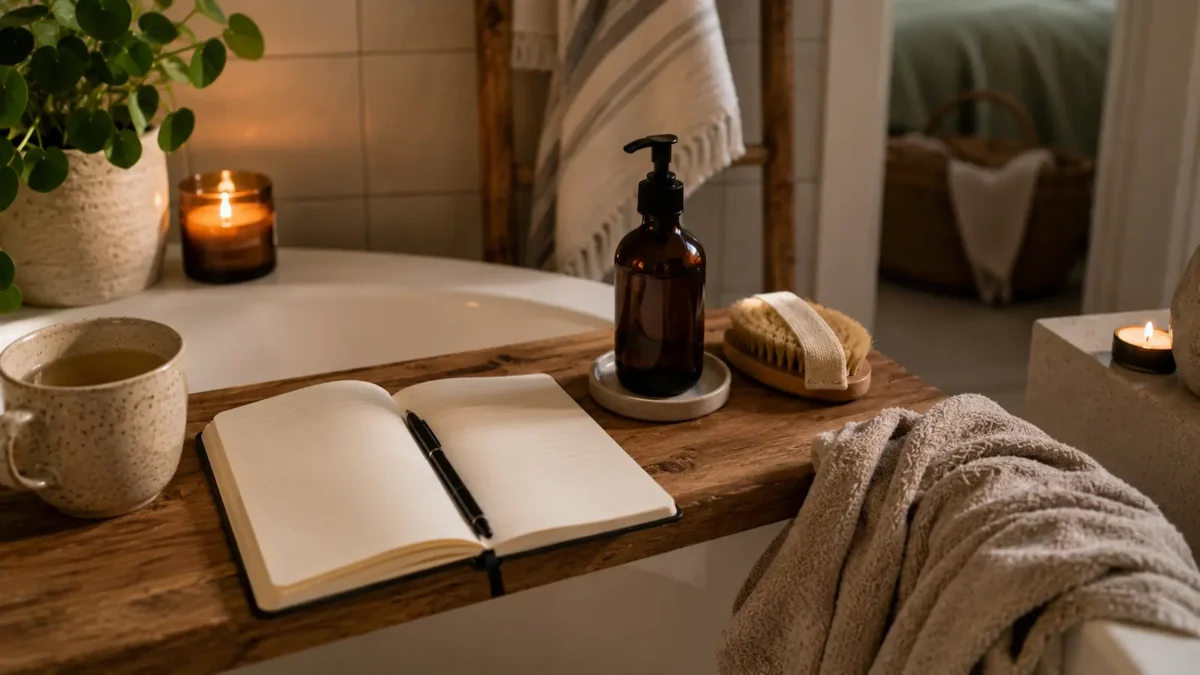
In Norway, wellbeing often becomes quite practical. Cold air, wind, dark winter months, heated rooms and stronger spring and summer sun all affect what feels useful. That is why we do not write about beauty as an ideal. We write about choices that can make everyday life a little easier.
Pifada does not give medical advice, and we do not promise miracles. If you have ongoing skin problems, discomfort or reactions, you should contact healthcare professionals. Here you will find calm, research-based guides about self-care, beauty and choices that fit an ordinary life in Norway — without unnecessary pressure.
Wellbeing is not a perfect routine
A good routine is not necessarily the most advanced one. Often, it is the one you actually use.
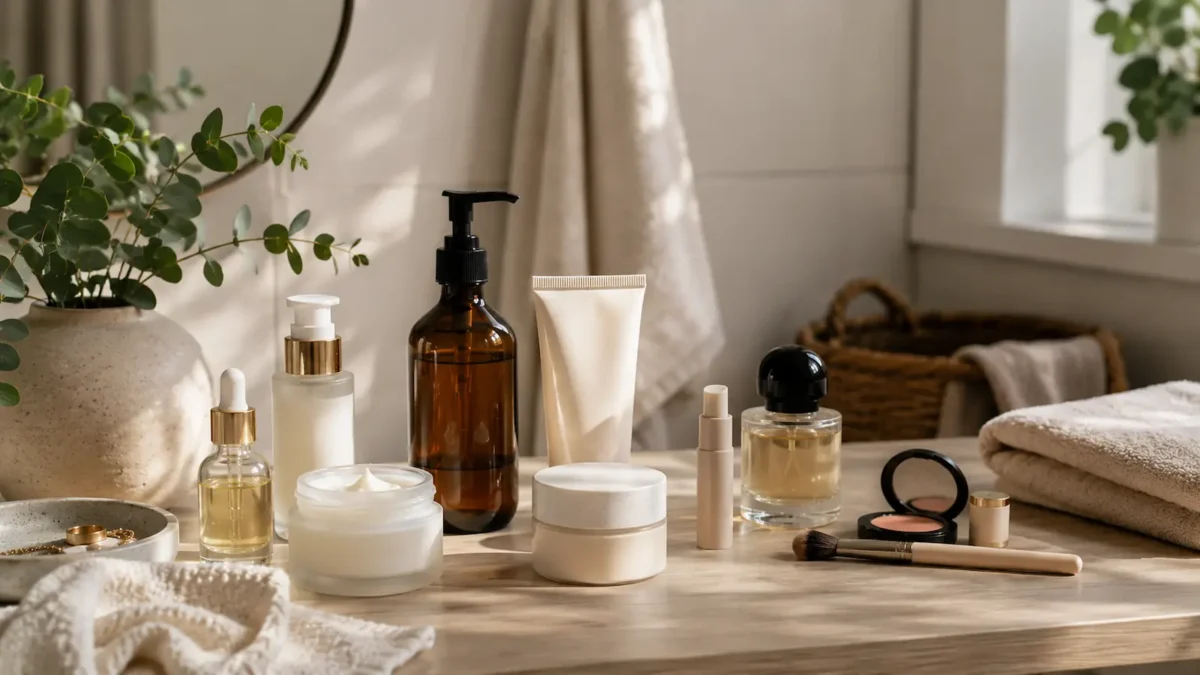
It can be tempting to think that wellbeing starts with more products, more steps and more control. Cleanser, serum, cream, oil, mask, hair treatment, fragrance, makeup, sunscreen — all of these can have a place. But they do not all need a place at the same time.
For many people, a simple routine is more realistic. Something you can manage on an ordinary Tuesday. Something that works when you are tired, when the bathroom is small, when the budget is not endless, and when you do not feel like reading fifty ingredient lists before bed.
Not every trend needs to become part of your everyday life. Some products can be useful for some people, but unnecessary for others. The point is not to do as much as possible. The point is to choose what actually helps you.
Often, a few things you understand, like and use regularly are enough. A gentle cleanser if you need one. A cream that suits your skin. Sun protection when the UV level makes it sensible. Hair and body care that feels practical, not like a small project.

Wellbeing should not become another task you feel you are failing at. It should bring a little more calm, not more pressure.
The Norwegian climate makes wellbeing more practical
In Norway, wellbeing quickly becomes less glamorous and more practical. It is not just about what looks nice on a shelf. It is about what works when the weather changes, the air is dry, and your skin meets cold, wind, heated rooms and spring sun.
In winter, cold outdoor air and dry indoor air can make your skin and hair feel different from the rest of the year. A simple cream, a gentle cleanser or a hair treatment you actually use can be more helpful than an advanced routine you give up after three days.
The dark season matters too. Not because a product can fix it, but because many ordinary days can feel a little flatter when daylight is limited. Small routines can mean more then: a shower that feels good, a fragrance you like, a cream that does not sting, or five minutes without a screen before bed.

Then spring and summer arrive, and suddenly the sun becomes part of the picture again. UV rays can be strong even when the air still feels cool, and sunscreen should not give a false sense of safety. For advice on the UV index, sunscreen, clothing and breaks from the sun, it is better to rely on health sources such as Kreftforeningen than on beauty shops.
That is why we think “everyday life first” in Wellbeing. Not trend first. Not as many products as possible first. First: climate, season, skin, hair, time, budget and what you actually have the energy to do on an ordinary day.
A good choice is often easy to understand. It fits into your routine, works with the climate you live in, and does not turn self-care into another project.
Skin, hair, body, fragrance and makeup
Wellbeing on Pifada is about the small choices that actually belong in ordinary everyday life. Skincare, haircare, body care, sun protection, fragrance and makeup can all have a place here — but not as requirements, rules or performance.
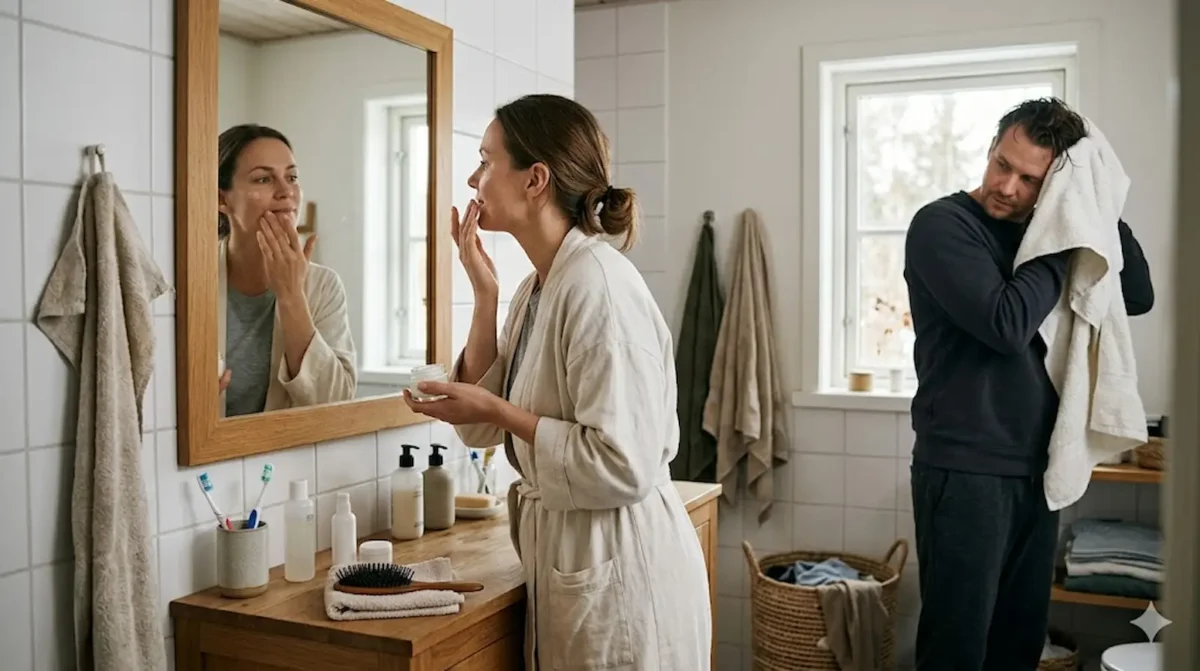
Skincare can be simple. A cleanser your skin tolerates well. A cream that suits the season. Sun protection when the UV level makes it sensible. A routine does not have to be big to have value.
Haircare is often practical too. Dry indoor air, hat weather, wind, rain and frequent washing can mean your hair needs different things in January than in July. It is usually more useful to think about use and everyday life than about what is most visible on social media.
Body care can be just as simple. A shower gel you like. A cream that feels good to use. A deodorant that suits you. Small things that help you feel a little more put together, without turning the bathroom into storage space.
Fragrance and perfume are more personal than many buying guides make them sound. Some people like something light and clean. Others prefer something warm, noticeable or seasonal. There is rarely one right answer. It is more about taste, situation and how much you actually want to use fragrance in everyday life.
Makeup does not have to be trend-led either. For some people, a concealer, mascara or tinted lip balm makes the morning a little easier. For others, makeup is creativity, play and expression. Both are fine. The point is that makeup should be a choice, not pressure.
A product can be useful if it fits your need, your skin and the way you actually use it. That is why we care more about role than hype: What is the product meant to do in your routine? When will you use it? And do you really need it?
When we write about cosmetics, ingredient lists and product claims, we try to separate what a product promises, what it is actually meant for, and what you should pay attention to. Cosmetic products in the EU and EEA are regulated by specific rules for safety, labelling and product claims. You can read more in the EU regulation on cosmetic products.
For Pifada, wellbeing is not about doing as much as possible. It is about choosing a little more wisely, a little more calmly and a little more in line with the life you actually live.
When beauty choices become too complicated
Beauty choices can become complicated quite quickly. Not because you are doing something wrong, but because there is so much noise around skincare, haircare, makeup and self-care.

There is always a new product, a new routine, a new ingredient and a new recommendation. Some people say you should do more. Others say you are doing too much. In the end, it can feel as if everyone is recommending something different.
That makes it easy to buy more than you need. A cream because it is popular. A serum because someone showed it on TikTok. A hair treatment because it looks promising. A perfume because it seems to be everywhere right now. Trying something new can be nice, but impulse buys quickly become expensive if the product does not have a clear role in your everyday life.
Ingredient lists and product claims do not always make the choice easier. Many products promise a lot, but it is not always easy to understand what actually suits you. A routine can look good on a screen and still be wrong for your time, budget, skin or way of living.
It is also worth paying extra attention to recommendations on social media. Influencers, profiles and magazines can be inspiring, but some recommendations are also advertising. Forbrukertilsynet, the Norwegian Consumer Authority, has rules and guidance on labelling advertising and hidden marketing, because it should be clear when someone is trying to influence a purchase.
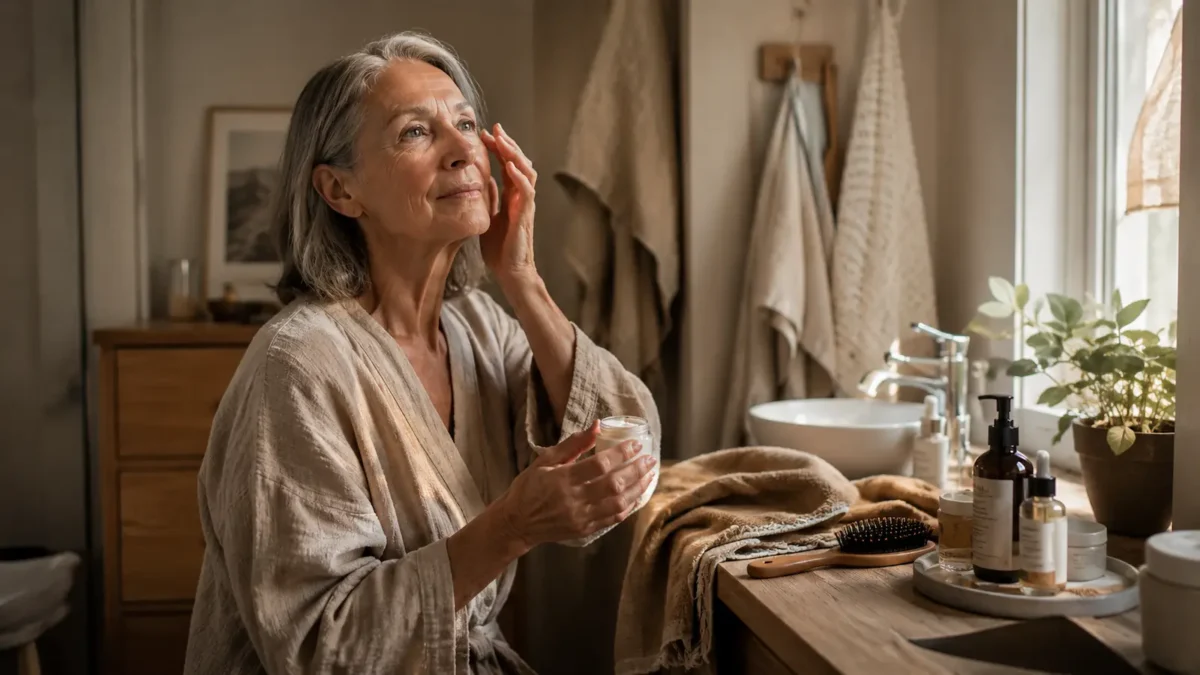
On Pifada, this does not mean you have to be suspicious of everything. It simply means you can ask a few calm questions before you buy: Do I need this? Do I understand what it is for? Does it fit into my routine? Do I already own something that does roughly the same thing?
If a routine makes you feel more stressed than calm, it may not be the right routine for you.
Wellbeing should not be about keeping up with everything. It should help you find what actually fits — and let the rest stay outside your bathroom shelf.
What should you think about before buying?
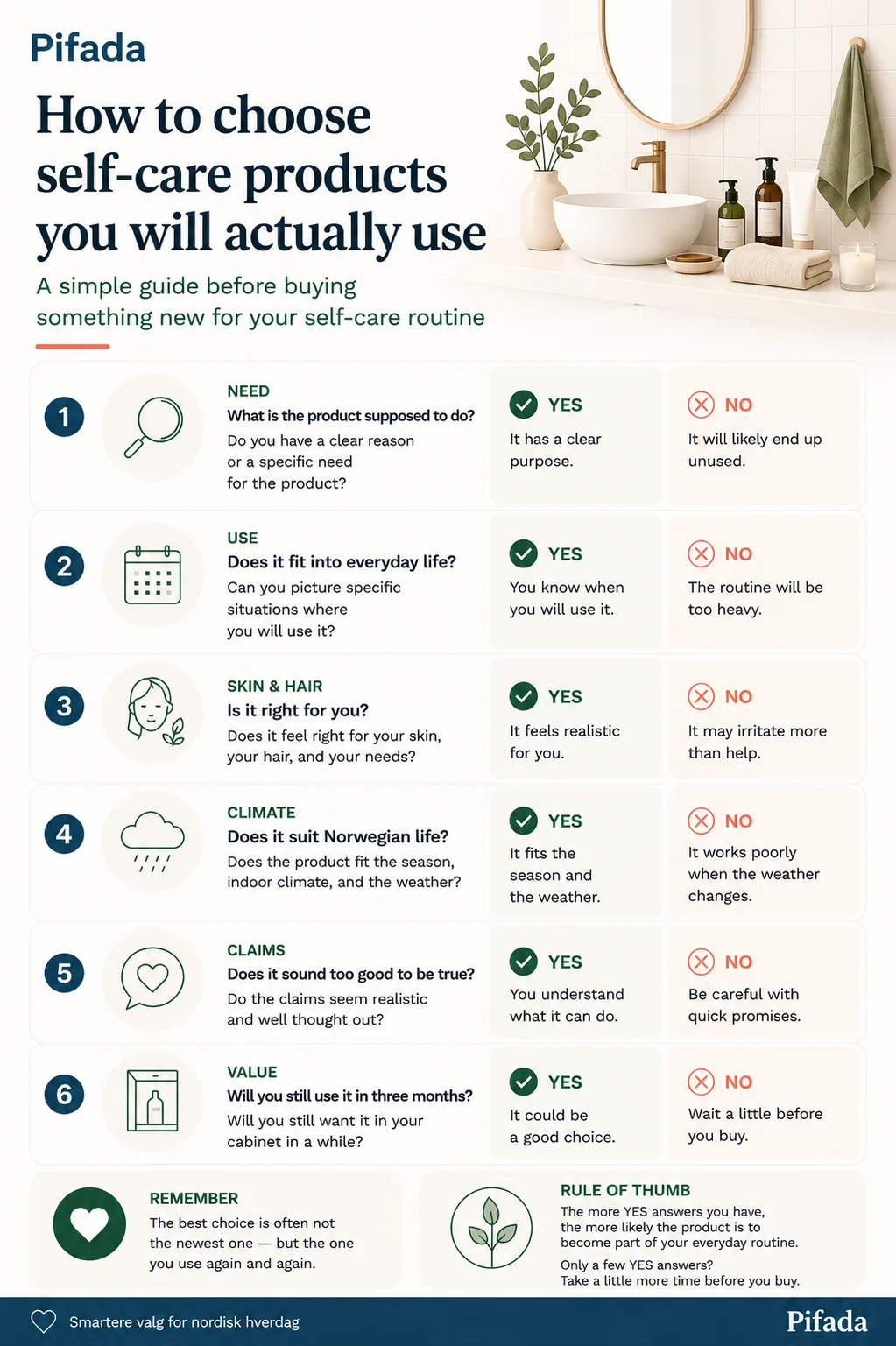
A good beauty purchase rarely starts with the question “what is most popular?”. It usually starts with: What do I actually need, and will I really use this?
On Pifada, we look at wellbeing choices through a few simple criteria. Not to make shopping more difficult, but to make it a little less random.
- Need: What do you want to support, simplify or make more comfortable in your everyday life?
- Use: Will you actually use the product, or will it end up at the back of the cupboard?
- Skin, hair and preferences: Does it suit you, or does it only suit the current trend?
- Season: Does it make sense for a Norwegian winter, dry indoor air, wind, rain or sun?
- Budget: Does the price make sense for how often and how you will use it?
- Simplicity: Does it make your routine easier, or just add another step?
- Claims: Does the brand promise more than seems reasonable to expect?
Need is a good place to start. Maybe you want an easier morning routine. Maybe you need something that feels better in cold weather. Maybe you simply want a fragrance that makes you feel a little more ready for the day. These are different needs, and they do not require the same solution.
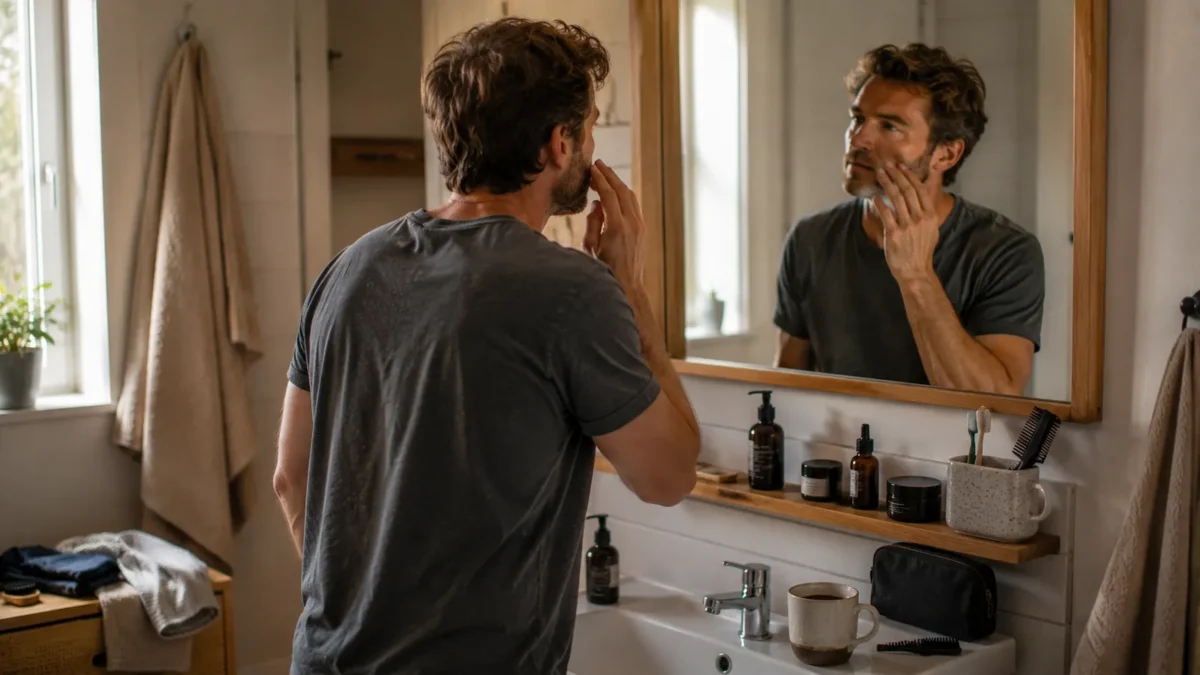
Use is just as important. A product can be useful if it fits your need, your skin and the way you actually use it. An expensive serum you never manage to include in your routine is not necessarily a better purchase than a simple cream you use every day.
Season matters too. What feels right in January is not always the same as what works in June. Cold air, dry indoor air, wind and sun can make skin, hair and preferences change throughout the year. That is why it makes more sense to think practically than to buy from one fixed idea of what is “right”.
Budget is not only about the lowest price. It is about value in your everyday life. Sometimes it can be worth paying more for something you use often and genuinely like. Other times, it is smarter to choose something simpler, especially if the product only needs to solve a small task.
When shopping online in Norway, you should also check more than the product itself. Look at return terms, shipping, the right of withdrawal and complaints before you order, especially if you are buying skincare, fragrance or makeup you have not tried before. Forbrukerrådet has useful information about consumer rights, withdrawal rights and complaints.

Finally: be a little sceptical of big promises. Cosmetics can be useful, pleasant and important for self-care, but they are not magic. If a product promises a lot in a very short time, it is worth pausing for a moment.
A good choice does not have to be perfect. It only needs to fit you better than the thing you might otherwise buy on impulse.
Wellbeing for different everyday lives
Wellbeing does not look the same for everyone. What works for one person can be too much, too expensive or too impractical for someone else.
That is why we prefer to think in situations, not fixed answers. What do you need in your everyday life? How much time do you want to spend? What feels good, and what just becomes another thing to remember?
For you who want to keep it simple
If you want to keep it simple, you do not need to build a big routine. Start with a few products that have a clear role. Something that cleanses, something that gives moisture, and sun protection when the UV level makes it sensible may be enough.
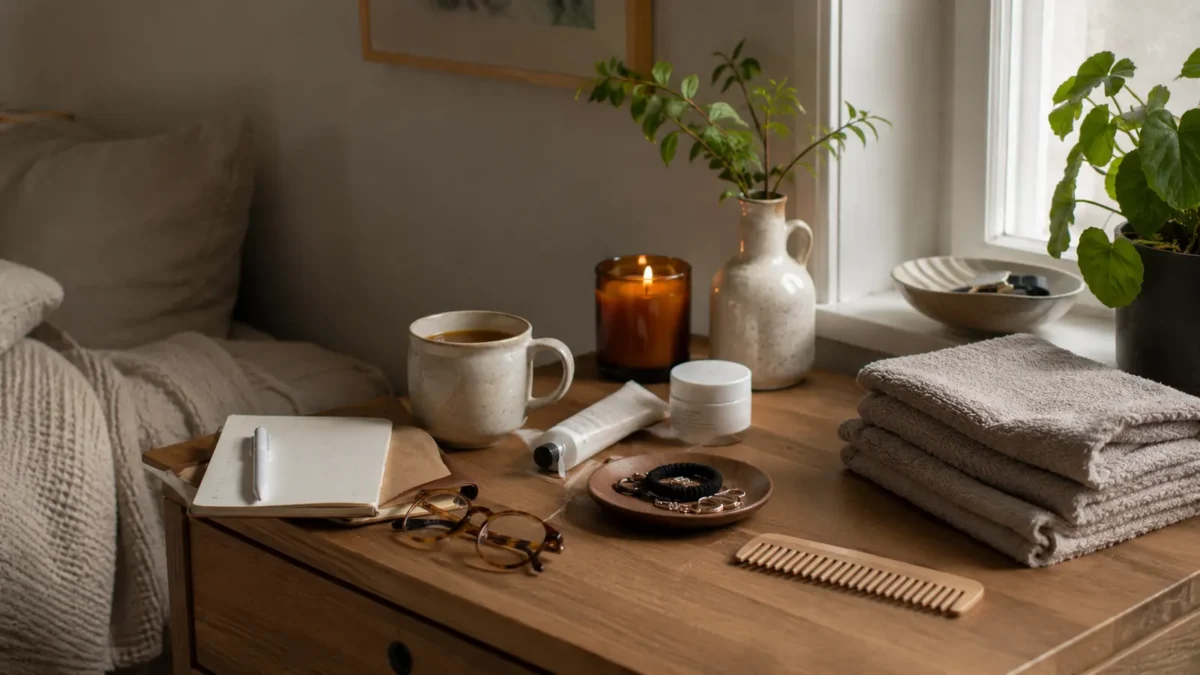
The most important thing is that the routine is easy to repeat. Not because you have to be “good” at self-care, but because products that are actually used are often more useful than products that only look right in the bathroom.
For you who have sensitive skin
If your skin reacts easily, it can be wise to make calmer choices. Read the label. Look for products you understand. Test carefully, and avoid changing everything at once.
Sensitive skin does not mean you have to buy the gentlest, most expensive or most specialised product you can find. It mainly means you should pay attention to how your skin reacts, and be careful with strong promises and long routines with many active ingredients.
If you have ongoing skin problems, rashes, pain, itching or discomfort that does not go away, you should contact healthcare professionals. Helsenorge has an overview of skin and hair conditions for those who need health information, not beauty advice.
For you who often buy too much
If you often end up with products you do not use, it can help to pause a little earlier in the buying process. Do not only ask whether the product looks nice. Ask whether it has a clear place in your everyday life.
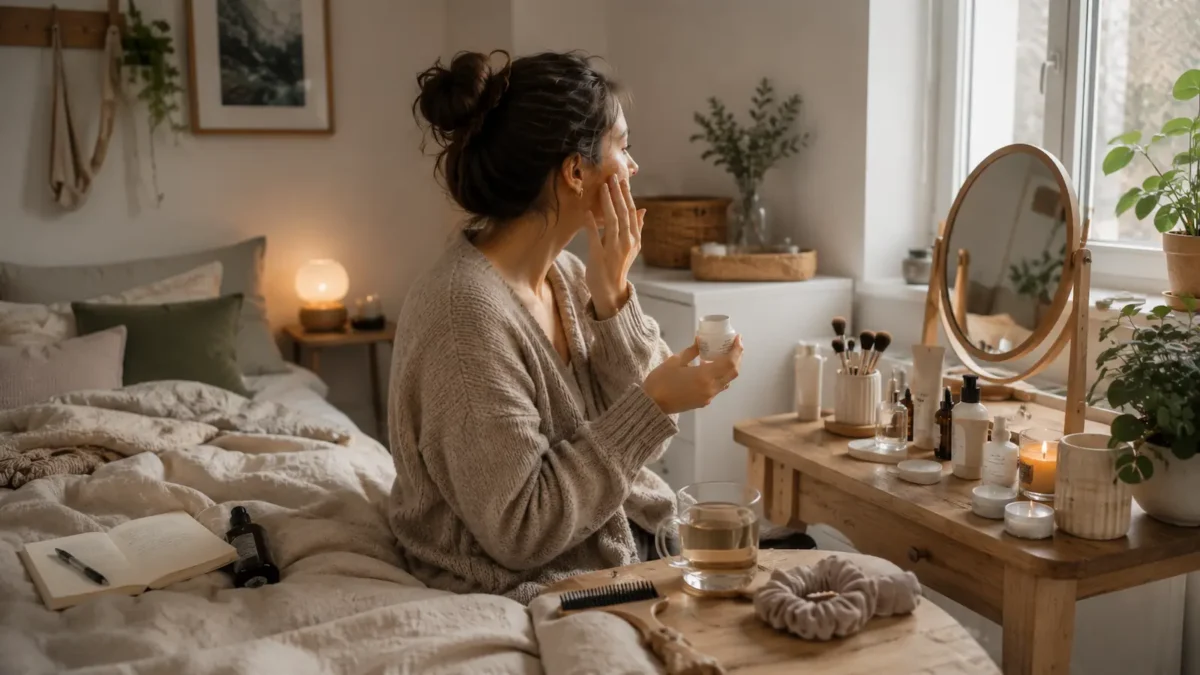
A simple rule is to use up, understand and evaluate before buying more. Do you need a new product, or do you actually need to use what you already have? It is not as exciting as a new basket, but it is often better for your bathroom, your budget and your peace of mind.
For you who like beauty, but not the pressure
Beauty can be joy. It can be colour, fragrance, texture, expression and small moments that make the day feel nicer. It does not always have to be practical to have value.
But it should still be your choice. If makeup, skincare or perfume brings you joy, that is lovely. If it starts to feel like something you have to do to be “right”, it is okay to step back a little.
You can like beauty without following every trend. You can use makeup without doing a full routine. You can care about skincare without turning it into a project.
For you who want self-care that fits busy days
Busy days do not need big routines. They often need solutions that are easy to manage. A cream by the sink. A hairbrush that actually works. A shower that does not require five products. A small bedtime routine that does not take more time than you have.
The point is not to become a new person before eight in the morning. The point is to make a few choices a little easier, so self-care fits into the day instead of competing with it.
When wellbeing fits your everyday life, it becomes less about performance and more about support.
Common mistakes when we try to take better care of ourselves
It is easy to make wellbeing more complicated than it needs to be. Often, it happens with good intentions. We want to take better care of ourselves, find something that fits, or bring a little more order to our routine.
The problem is not that we try. The problem is that we sometimes start with too much, too quickly, or with products that do not really fit our everyday life.
Starting with too many products
A new routine can feel motivating at first. New cleanser, new cream, new serum, new hair treatment, new fragrance, new makeup. Each product can make sense on its own, but together it can become too much.
If you start with too many products at the same time, it also becomes harder to understand what actually works for you, what you like using, and what is just taking up space. A calmer start is often better: one or two choices at a time, and a little time to see how they fit into everyday life.
Buying what is popular, not what fits
A product can be popular without being right for you. It may suit another skin type, another hair type, another style, another budget or a completely different everyday life.
This is especially relevant when the recommendation comes from social media. Inspiration can be useful, but it should be clear when something is advertising. Forbrukertilsynet, the Norwegian Consumer Authority, writes about hidden advertising and labelling of marketing, which matters in a field where products are often recommended by profiles, influencers and commercial media.
Before you buy something just because “everyone” is talking about it, you can ask: Does this actually fit me? Do I have a real need for it? Or do I just like the feeling of being up to date?
Expecting quick results
Many beauty products are sold with big words. That can create an expectation that something should change quickly. In practice, self-care is rarely that dramatic.
It is better to think calmly and practically. How does the product feel to use? Does it fit into your routine? Will it be used regularly? Are the brand’s claims reasonable, or do they promise more than you should rely on?
If you have skin concerns or problems that continue, a beauty routine should not carry that responsibility alone. You should contact healthcare professionals.
Forgetting the climate and season
Norwegian weather means needs can change throughout the year. Winter, wind and dry indoor air can make something feel right in January. Sun, sweat, travel and brighter days can make you want something else in June.
That does not mean you have to change everything every season. But it can be useful to look at your routine with the season in mind. Maybe you need fewer products, not more. Maybe you only need to adjust texture, use or timing.
Believing that more expensive always means better
More expensive can sometimes mean better quality, a nicer feel or more thoughtful packaging. But it does not automatically mean the product suits you better.
An affordable product you use often, understand and like can be a wiser choice than an expensive product that stays unused. Price should be considered together with need, use, amount, shelf life and how important the product actually is in your everyday life.
Overlooking returns, shipping and terms when shopping online
Buying beauty products online can be practical, but it is easy to forget the details. Shipping, returns, withdrawal rights and complaints matter more when you buy something you have not smelled, tested or seen in the right light.
Before you order, you should check what the shop says about returns and terms. Some products may have limitations for hygiene reasons, and it is better to know that before you open the package. Forbrukerrådet has useful information about consumer rights, withdrawal rights and complaints.
It may not sound very glamorous. But a good purchase is not only about the product. It is also about safety, terms and whether you can actually change your mind if the choice does not fit.
Wellbeing often becomes better when we make it a little simpler.
How we would think about it
If we were building a wellbeing routine from the start, we would not begin with trends. We would begin with everyday life.
What do you actually need? What do you already use? What do you miss? And what only makes the routine more complicated than it needs to be?
- Start with what you actually need. Not with what is most visible right now.
- Choose a few products you understand. It is easier to use something well when you know why it is there.
- Think about climate, season and everyday life. Norwegian winter, dry indoor air, wind and spring sun can affect what feels useful.
- Be sceptical of big promises. A product can be good without promising everything at once.
- Prioritise what you actually use. The best purchase is often the one that does not stay unused.
- Remember that wellbeing can also be simple. A small routine can be enough.
- Let self-care support you, not pressure you. It should bring a little more calm, not more stress.
That does not mean you have to be minimalist, or that you cannot enjoy beauty, fragrance, makeup and lovely products. It simply means your choices should have a place in your life, not only in your shopping basket.
Sometimes the right choice is to buy something new. Other times, the right choice is to use up what you have, simplify the routine or let a trend pass.
You don’t have to do everything right to feel well.
It is enough to choose a little more consciously, a little more practically and a little more on your own terms.
How we have assessed this
This is a research-based editorial guide. It is not a product test, not medical advice and not a ranking of specific products.
We have not physically tested skincare, haircare, makeup, fragrance or body care for this hub article. The goal is to explain how Pifada thinks about wellbeing as a category: calmer choices, clearer needs and less pressure.
We do not write this type of content to follow beauty trends. Trends can be inspiring, but they are rarely enough on their own. On Pifada, we care more about what fits ordinary life in Norway: climate, season, time, budget, simplicity and actual use.
When we assess wellbeing choices, we look especially at:
- Practical use: Does this fit into an ordinary day?
- Simplicity: Does it make the routine easier, or more complicated?
- Clear need: Does the product have a clear role, or is it mostly an impulse buy?
- Nordic everyday life: Does the choice make sense with cold weather, wind, dry indoor air, dark winter months and sunny periods?
- Realistic budget: Do price and use make sense together?
- Care with claims: Does the brand promise more than it is reasonable to expect?
- Safe and honest communication: Is it clear what is advice, assessment, advertising or a commercial link?
In future articles, Pifada may earn money from some affiliate links. This means we may receive a commission if you click a link and buy something from a partner. It should not cost you more.
Commercial partnerships should not decide what we recommend. When we recommend something, it should be because it fits our criteria — not because a shop or brand pays the most.
We also try to be clear about the limits. Cosmetics and self-care can be useful, pleasant and important in everyday life, but they are not the same as medical treatment. If you have ongoing skin problems, reactions or discomfort, you should contact healthcare professionals.
In short: we assess wellbeing as something that should fit your life. Not as something you have to perform.
Frequently asked questions
What does wellbeing mean on Pifada?
Wellbeing on Pifada is about simple and realistic choices that can make everyday life feel a little calmer, more comfortable or easier to manage. It can be skincare, haircare, body care, fragrance, makeup, sun protection or small routines that fit the life you actually live.
It is not about doing everything right. It is about choosing what makes sense for you.
Is wellbeing only about skincare?
No. Skincare is part of Wellbeing, but it is not the whole category. We also write about hair, body, fragrance, makeup, sun protection and self-care in ordinary everyday life in Norway.
For us, wellbeing is broader than products. It is also about how routines, choices and small practical steps can fit your time, budget, season and needs.
Do I need an advanced skincare routine?
Not necessarily. Many people do well with a simple routine that is easy to use over time. A good routine is not always the one with the most steps, but the one that actually fits you.
If a routine becomes so complicated that you cannot keep up with it, it may not be the right routine for you.
What should I think about before buying skincare online?
Start with your need. What role should the product have in your routine? Also check ingredients, how to use it, size, price, shipping, return terms and whether the shop is clear about withdrawal rights and complaints.
It can also be wise to be careful with products that promise a lot in a short time. A good purchase should not only look right in the shopping basket. It should fit your skin, your everyday life and the way you actually use products.
Are expensive products always better?
No. More expensive products can sometimes have a texture, fragrance, packaging or experience you prefer. But a high price does not automatically mean the product suits you better.
An affordable product you use often and enjoy can be a better choice than an expensive product that stays unused.
How does the Norwegian climate affect skin and hair?
The Norwegian climate can make wellbeing more practical. Cold air, wind, dry indoor air, dark winter months and quick weather changes can affect what feels useful throughout the year.
In winter, many people may prefer simpler and more protective routines. In spring and summer, sun, UV levels and sun protection become more important to think about. That does not mean you have to change everything all the time, but your routine can follow the season a little.
How can I avoid buying too many beauty products?
A good first step is to ask what the product is actually meant to do for you. Does it have a clear role, or are you buying it because it is popular right now?
Try using up what you have before buying more. Choose a few products you understand, and notice what you actually use in everyday life. Fewer products can give more overview, less stress and fewer bad purchases.
Is this medical advice?
No. Pifada does not give medical advice, diagnoses or treatment. Our wellbeing content is research-based editorial content about everyday choices, self-care and products.
If you have ongoing skin problems, reactions, pain, rashes or discomfort that does not go away, you should contact healthcare professionals.
Where does exercise fit on Pifada?
Exercise and outdoor life belong in the future category Sport, outdoor life & active lifestyle. In Wellbeing, we may mention breaks, sleep and simple routines as background, but not as a separate sports or fitness topic.
Sources and further reading
This guide is based on open sources about cosmetics, consumer rights, advertising, sun protection and everyday consumption. The goal is not to make wellbeing more complicated, but to give a safer starting point for calm and practical choices in Norway.
- Mattilsynet and the EU regulation on cosmetic products — useful further reading on cosmetics, safety, labelling, ingredients and what kinds of claims can be used about products.
- Forbrukerrådet — useful further reading on purchases, withdrawal rights, complaints, returns and what to check before buying products online in Norway.
- Forbrukertilsynet — relevant for understanding advertising, influencer marketing, hidden advertising and why commercial recommendations should be clearly labelled.
- Kreftforeningen — useful further reading on sun protection, the UV index, sunscreen, clothing, shade and why sunscreen should not be the only form of protection.
- SIFO / OsloMet — research on consumption, everyday life, buying habits and how people use products, money and resources in practice.